Monday, February 2, 2015

d'amore al dolce impero

It has been more than two weeks, and I cannot stop listening to this.
Originally released on the RCA LP "Rossini Rarities" in 1967, Spanish soprano, Montserrat Caballe is not only in peak vocal condition here, but shows a musicality and vocal elasticity, the likes of which are virtually impossible to come by today (or ever?). I've listened to other recordings of this piece, and usually the results are that someone has barely managed to get through a very difficult aria (notable exceptions go to Cristina Deutekom and Maria Callas), but no one comes close to the seemingly effortless musicality and joy that Caballe brings to this performance. Not only does she toss off the most difficult coloratura with ease, but she makes this devil of a piece sound musical and even fun. The extended run of triplets (1:34) is astounding, and when the tempo increases for faster and more extended runs (3:04), it is simply mind-boggling. I understand this will only interest a few of you, who fall into a rather small "specialty market" category of music listeners, but if you are at all interested in great singing, this is really well worth a listen:


Wednesday, December 31, 2014

once upon a time

Warning: spoilers ahead!

In 1987, I was an ambitious, undereducated, oversexed, too-smart-for-my-own-good, 24 year old. Ronald Reagan was President, Ed Koch was the Mayor of New York City, and AIDS was ravaging both coasts of the country. To those who weren't there, it's difficult to explain how extreme the levels of fear and anger permeating nearly everything in New York City, especially the world of the performing arts. Rock Hudson and Liberace were the highest visibility celebrity casualties of the epidemic (Hudson died in '85, and Liberace in '87), but the worlds of fashion, opera, ballet, and Broadway saw daily losses. Casting directors were actively overlooking gay men for less talented heterosexual actors for fear of illness or death, and in social circles, friends would get sick and return to their childhood homes to wither away with their families, or they'd simply disappear. On the dance floor Saturday night, gone by Monday. These were very scary times.

Amid the horror and tragedy, Stephen Sondheim, who is both openly gay and arguably the father of the modern American musical (that particular torch having been passed to him from Oscar Hammerstein), opened his eagerly awaited Broadway musical parable, "Into the Woods," which featured a cast of characters straight from the pages of familiar fairy tales. Incongruous? More ingenious, really. 

He's never said so, but to those cognoscenti-New York-theater-goers who were lucky enough to have seen those first run of performances at the Martin Beck Theater on West 45th Street (renamed the Al Hirshfeld Theater in 2003), it was clear that Sondheim was using the murderous, and in that production, unseen giant as an allegory for AIDS. In the play's second act, characters we'd grown up with, known all our lives, and felt a deep kinship to were inexplicably taken from us; violently snatched away, some as retribution for personal transgressions, others completely randomly. The Happily Ever After at the end of the play's first act proved a fallacious construct that couldn't be realized no matter how much we wished for it (I wish...). 


Robert Westenberg as the Wolf
Despite its fancy-free, fairy tale facade, "Into the Woods" was a dark piece of theater, one that dared to address and even push the public's comfort boundaries on topics that rarely see the light of day, at least not in musical theater. The original scenes between Little Red as a sexually curious teenager and the Wolf as an insatiable sexual predator deliciously teetered on inappropriate. So much so that when I saw the original production in previews, the wolf appeared on stage wearing just a motorcycle jacket and a huge, hairy, prosthetic cock and balls. I understand that after many complaints from theater patrons who'd brought children to the show expecting a family-friendly fairy tale musical, the Wolf's costume was changed, and he got a pair of pants for the opening.

The Disney-fied film version completely avoids addressing any sexual content within Little Red's story line by casting the prepubescent Lila Crawford. While the young Ms Crawford's performance shone for me in the film, of course, none of the vital and electric topics (childhood sexuality, female sexuality, sexual curiosity and experimentation) that made her story line in the stage production so compelling were able to be addressed. And given the cartoon phoning-in of Johnny Depp's, Wolf (more like Pirate Jack Sparrow in a kitty-cat costume), it would be preposterous if he'd had any sexual appeal at all. Though Little Red's lyrics remain unchanged, what I remember in the theater as clearly indicating newfound sexual knowledge and loss of virginity, read as hollow in relation to her bizarre encounter with the Wolf in the film.  

There are numerous other vital happenings that were in the stage production that have been scrubbed from the film. Perhaps most notable, and most mentioned in nearly every review I've seen (which is admittedly, not many), is the absence of the Narrator; an important role whose song, "No More," a partial duet with the Baker (his son), was not only beautiful and poignant, but important to the trajectory of the story. The Narrator also served as a go-between from audience to action, and when he was brutally killed in the second act, the delineation between audience and on-stage action was symbolically eliminated, making the tragedy of the second act that much more real for the audience. 

Also sadly departed, and I feel equally important, is the reprise of the song "Agony." The Princes sing this song in the first act when they're longing to be united with their Princesses. The reprise of the song in the second act (missing from the Disney version), comes "happily ever after," when the Princes have already been united with their Princesses, who are now waiting for them at home. In the reprise, however, the Princes are not only bored with their Princess wives, but long to stray with, respectively, a sleeping girl as white as snow encased in a glass casket (there's a dwarf standing guard), and a sleeping beauty isolated in a castle surrounded by brambles and thorns. The song sets up Cinderella's Prince's adulterous encounter with the Baker's Wife, and also highlights the piece's overarching moral, "be careful what you wish for." Those who saw it will remember that in the original stage production, the Wolf and Cinderella's Prince were played by the same actor. This, of course, is harder to pull off on film than it is on stage where the audience's suspension of belief is heightened, but it was a very successful device, which helped to suggest that perhaps there is a little bit of Wolf in even the most charming of princes. 

The theme of death and disillusionment remains in the film, but seems so watered down so as to not offend or challenge Disney's target demographic. In the stage production, for example, when Milky White (the cow, and Jack's friend) dies, Jack's loss (Jack, simple-minded and also played by a teen on stage) is deep and poignant, yet Milky White's screen death seems to pass with no mention at all, save how the cow might help resolve the Witch's spell.

Also absent was the vital struggle of the Baker's Wife to be seen as an equal by her husband. The action of the film seems to start with both Baker and Wife on equal footing, seemingly eliminating any need for this feminist subplot. And while that may be a good indication of how far we've come in the past 27 years, the urgency of the Baker's Wife's struggle to be seen as an equal in breaking the spell (a struggle which won Joanna Gleason a Tony award for Best Actress in a musical) was missed by this viewer. 

Perhaps most intrinsic in the film's not working for me is the Witch. There are two points related to the Witch where I feel the film goes astray. The first is that, in the original, Repunzel is killed by the Giant. This, of course, helps explain the Witch's urgent and extreme descent into madness and her disappearance. 

*note*
There is certainly more to be gleaned from the Witch's character that I may be missing or am glossing over simply for the sake of time and space - notably that the Witch's love for Repunzel indicates that "Witches can be good," among other things. This piece is very complex and rich with plenty of room for analysis. 

The second problem for me with the Witch in the film, and I know I may get some flak for this, is the casting. Yes, Meryl Streep is an amazing actor; a magician who can do no wrong. She can conquer any accent, time period; she can sing, dance - we love her, really, we do, but, forgive me, she is just too old for this role.  

In 1987, when Bernadette Peters, as the Witch, was freed from the spell that turned her into a crooked-nosed, wart-covered, hump-backed old crone, she transformed into, well, Bernadette Peters! And not just any Bernadette Peters, but a sparkling, voluptuous, 38 year old Bernadette Peters, whose snowy-white breasts were spilling from atop her silken curvy hourglass silhouette. A transformation that made the audience gasp as one - we all suddenly realized how unfair and cruel the spell was to hide this glorious beauty behind the mask of an old shriveled gorgon. When Meryl Streep's Witch, by comparison, breaks the evil spell, she is transformed from a disheveled old woman, to a very well-put together old woman. Again, she's terrific! I love her, but no amount of cinematic movie-magic is going to transform a 65 year old Meryl Streep into a 30-something year old knockout. She gets transformed into a great-looking 60-something year old Meryl Streep.

Some of this may read as petty and nit-picky, and I apologize for that, but as I watched the film, I actually wept remembering what was going on in my world when I'd first seen the show, and how deeply it had effected me. Watching the film, I also felt cheated that such an important and richly textured piece of musical theater had been robbed of its dark and prophetic messages, and turned saccharin for Disney's box office, family-friendly purposes. While perhaps understandable that the celluloid version be sweetened up for its Christmas day release, it's also, unfortunately been stripped of its psychological complexities and much of its emotional content.

In light of what was happening at the time of its premiere; Right-wing religious fanatics claiming that homosexuals had brought a pestilence upon themselves, FDA regulations refusing life-saving drugs to dying young men, hospitals denying humane treatment to patients, and a President who hadn't mentioned AIDS until that very year (compare Reagan's response to more than 20,000 dead Americans with how the press treated Obama when 1 American was diagnosed with Ebola), I continue to hold the show's original messages close; not only that I must continue to be careful for what I wish for, but that someone is on my side, and that no one is alone. 

That damaged and beaten small community; that nontraditional family of those frightened and traumatized few that remain at the closing of the show promise to rebuild, and that is just what we have done, and continue to do. 

Isn't it nice to know a lot?
... and a little bit not.


Wednesday, October 8, 2014

cola cola granola ebola


What was going to finally inspire me to return from my extended blogging hiatus? I'd barely scratched the surface of my impressions of Dominica; its lush beautiful Caribbean landscape, the friendly people, those joyful and frolicsome children, and the disturbing lack of African culture in a Black nation that's been culturally and historically regulated by Christian missionary doctrine. I pondered my experience long and hard, but, for some reason, didn't turn to the blog as an avenue of expression.

Certainly years of bottled-up emotions had been dislodged and rattled by watching the HBO presentation of Larry Kramer's, "The Normal Heart," but apparently that wasn't enough to motivate a blog post either. Likewise, the recent overabundance of violent police overreach, the cold-blooded murder of unarmed Black children in the streets of America by those sworn to serve and protect. I've thought about pouring my emotional response about that onto the internet, but what could I possibly write that wasn't being said more eloquently by people and communities more directly affected than me? Instead, I simply turned away in disgust and tried not to engage in the media minefield of tragedy and bad news, or the embarrassing and shameful debate about the law's just/unjust use of force in such cases.

Gun control, climate change, Truvada... there's certainly no shortage of news items or political stories to get my attention or to fire me up. However, I'm trying to limit my media consumption lately, and am simply attempting to practice more detachment and acceptance these days. Of course, this might not help my radical, community organizing, one-voice-can-make-a-difference protesting inner child, but it does allow more room for serenity and detailed attention to the small stuff of daily living. 

So what brings me here now? 

I've become disturbed by a trend I see on my Facebook feed and on some Internet news sources encouraging hysteria with over-the-top fear-mongering regarding Ebola. Sure, I expect science-free bullshit from FOX "news" and other ignorant right-wing propaganda machines, but not necessarily from individual people on my Facebook feed. Frankly, the people I see stirring up a ballyhoo about Ebola are more likely to be taken down by heart disease, diabetes, or random gun violence than a West African virus. Perhaps they'd be better off exhibiting some of the same urgency in regards to donuts or fried food. 

And am I the only one to notice the distressing parallel between these initial Ebola reactions and what happened in the early days of AIDS? A deadly virus runs unrestrained in communities that are seen as expendable, and the majority of the world looks away. Suddenly, Western white professionals (doctors, people seen as important or as having value) are infected and the world press takes note; right-wing pundits begin to promote fear and irrational, restrictive measures against the virus' most likely potential carriers, who are, after all, people who always seemed suspicious and dangerous anyway. Politicians and certain media outlets, of course, benefit by stoking these fires of fear. Lack of treatment and the documented tragedy and horror of those infected become conflated with fears of transmission, and it's all too familiar and all too infuriating. 

Thomas Eric Duncan, the 42 year old Liberian, and the first person diagnosed with Ebola in the U.S. died this morning at Texas Health Presbyterian Hospital in Dallas. Why, I'm wondering, were the two white, American missionaries, who contracted the almost-always fatal virus, and who have been recovering in an Atlanta hospital since August, given the experimental serum ZMapp and Duncan not? Why, for that matter, has the serum not been given to the almost 4000 other people who have died from the fatal virus in other West African nations?

Just like in the 80s when I saw elders in my community and some of my own friends dying; when I was an emotionally overwhelmed, dumbstruck kid wondering what was happening, I wanted to believe that the negligence of the U.S. government had nothing to do with the orientation of who was most being affected by a killer virus. I wanted to believe that I could trust the healthcare system, trust my country, trust the United States because life mattered. Life was sacred. I grew up fast, and I learned.

Funny how certain factions are calling out Obama for not taking fast enough action to combat this potential epidemic. I would like to take this opportunity to point out that there have been no American deaths due to this virus: none. Zero. Zip! Yet shrill cries of the President's negligence and ineptitude are being sounded from televisions and Waffle Houses from sea to shining sea. Cries from the same folks who've shot down his nomination for Surgeon General, Dr. Vivek Murthy, because the man dared tell the truth that gun violence in the U.S. is a national health threat. 

I would also like to remind those same strident anti-Obama-Ebola's-gonna-get-cha shrieking chicken littles that president Reagan, their very own hallowed Ronnie the Great, didn't even mention AIDS until there had been more than 20,000 dead Americans. And in the event that you've forgotten just how the Reagan administration handled that health crisis, you can read this 1982 detailed account of Reagan's Press Secretary, Larry Speakes responding to questions about the burgeoning epidemic.  

Now, here we are in 2014, and I'd like to believe that we live in a post-racial world, but I'm not blind and I'm not stupid. I'd like to believe that race has nothing to do with saving lives, or with police shooting unarmed children, or with anti-Obama vitriol, or housing, or employment, or crime, or education, or infant mortality... 
but like I said, I'm not blind and I'm not stupid.

Wake up America! Wake up world! Our responses are being documented. The rest of the world is watching and taking note. African lives matter. Asian lives matter. Black lives matter. Life matters, and life is short. So do the right thing; be just, be kind - the alternative is simply too costly and too terrible. 


Wednesday, March 12, 2014

purple turtle beach


I feel as if I should be gushing with endless details of the natural beauty of this island. It is astonishingly beautiful, at times breathtaking; lush, green, covered in flowers that don't look real, with vistas that look like painted backdrops, waterfalls, sulphur springs, natural pools, black sand beaches, and rain forest-covered mountains that jut straight out of the sea.

Yesterday, my cousin Rebecca and I took a bus from Roseau to Portsmouth. When we reached the Indian River, we hired a dreadlocked guy with a boat, Stevenson, to row us up the river; peaceful, lush, thick mangroves growing from brackish water alive with fish (apparently a scene from Pirates of the Caribbean was filmed there - I haven't seen it, but I'll watch it when I get home). Then we visited David, a friend of Rebecca's and a Peace Corps worker in the vocational school where he works with teenage kids - woodworking, sewing, computers, school rooms, and a nursery for a few of the babies of the kids. We walked up to and around Fort Shirley in the hot midday sun. The three of us sat for a while marveling at the spectacular view from beneath the protective shade of a huge mango tree at the fort before we walked back down the hill to Purple Turtle Beach. I changed into my swimming trunks at the side of the road, and floated in the water. I can't explain how delightful the water felt. The beach is separated from the street by a strip of almond trees, and the water is blue, calm, and so salty that one just floats.

As I floated, thoughts of loved ones rushed over me. I often feel that because I'm on vacation, I should be carefree, and only have happy thoughts. There is, however, something about the magnitude and hypnotic cadence of a calm sea that creates a melancholy in me; the endless and timeless rhythm of the tides that evokes thoughts of those no longer here. Perhaps it's the excitement of being in a faraway and exotic land, the magical power of nature, or the vast expanse of something much more powerful than I am that resonates backward and forward into infinite time and coaxes out of me memories of lost loves, broken connections; that allows me to feel them, to love them again as if they were still here.

I lay on the shore and felt the warm sun on my body and on my face. Gentle tides washed over me, up and down, repeat and repeat. I smiled, my back and shoulders braced in the warm black sand, tears rolled down the side of my face and mingled with the salty Caribbean Sea. I was silently weeping, not dramatic, just a sensation of being simply overwhelmed with deep loss as gentle waves washed over me. I felt simultaneously fortunate to have loved so deeply; happy, trying to take time with each memory, each beloved friend, the beating of my heart, the rhythmic movement of the waves: Greg, Tom, Johhny... I was momentarily carried through time and space as the remembered essence of each held me in the cool water.

As pleasant and transportive as my experience was, I understood that I needed to pull myself out of my reverie if I were to continue to socialize. I dove from the shore back into the water, and slowly made my way up the beach, pulled my t-shirt over my wet self, and the three of us, Rebecca, David, and I, walked down Purple Turtle Beach to an open bar in the shade where I drank a sweet and refreshing, ginger Quenchi. 

Thursday, March 6, 2014

on this island

The day before yesterday, I was awakened by the sound of my phone. I'd foolishly set my alarm for the wrong day. I'd barely slept. My good friend, George was texting, "eta 5 mins." Uh oh!

Luckily, I had packed everything the night before. I double checked around the house and ran downstairs to find George waiting in front of my building. It was 12 degrees that morning. I climbed into the passenger seat, and George whisked me off to Newark airport, a completely unnecessary yet greatly appreciated kindness. I got through security and arrived at my gate where I boarded a flight.


I'm now in a small hillside village called, Eggleston. It is nestled in the hills above Roseau (pronounced Rose-oh), the capital of Dominica (pronounced Domin-eekah, yes, like the Singing Nun). Eggleston is hardly what you'd call a village, there are no shops, or gas stations (though there is a rum shack on the side of the road), it's more an extended cluster of houses built alongside a steeply raked hillside. What Eggleston lacks in businesses it more than makes up for in chickens, roosters, dogs, goats, cats, children, and some of the most dense and lush flora I've seen anywhere. Overgrown bamboo bends down alongside the road and falls against huge avocado trees with thick, gnarled bases and twisting branches. Ginger, Anthurium, Caladium, African Tulip Trees, and Heliconia add shocking specks of color to the deep variegated green backdrop, while the sound of Calypso and neighbors' patois add a constant rhythmic soundtrack.

I'm visiting my cousin, who has been here for the last year working with the Dominican National Council of Women through the Peace Corps. Dominica is a poor country, not the Caribbean of the yacht-owning one-percenters like many of the other Caribbean islands. It is called The Nature Island of the Caribbean, as it is the least built on; covered with rain forests and rivers, falls and volcanic hot springs. The local people take great pride in the natural beauty of their Island. I've only been here two days, but the Dominicans are colorful, loud, and friendly people.

A former British colony (clearly evidenced by names like Salisbury, Great King George Street, and Princess Margaret Hospital), Dominica was only granted independence from UK rule in 1978. In terms of architecture and businesses, downtown Roseau is crowded with small brightly colored cement houses, rusted corrugated tin roofs, clothing stores, and vegetable stands lining narrow streets. The people are relaxed, friendly, colorful, and it seems everyone knows everyone else. And why shouldn't they? With a population of 17,000 for Roseau and its surrounding towns, it is comparatively small. 

Yesterday a HUGE cruise ship was docked in the port, literally towering over the harbor and the town, taller than any building in Roseau, and in the time it took them to disembark, the town more than doubled in size. Because I've been walking around with a camera (and because I'm white), everyone assumed I was off the boat for a day trip. I watched the boat pull out to sea last night, from atop the hill, at dusk. Today, not only was the town much less crowded, about half of the businesses were closed as well. And even though I was one of few white people in town, I wasn't treated the same way I had been yesterday. 

The Old Market, just one block from the waterfront in town, is where slave auctions used to take place. Of course, the Caribbean is rich with this kind of disturbing history. It was disquieting walking through it this morning before the businesses were set up. Then, about a half hour later, stalls were up selling the usual tourist crap: Rasta hats, T-shirts, coconut monkeys, etc..  While there is an historical commemorative marker, one would think The Old Market might be treated as a more somber, hallowed spot, but with a deficit of tourists, save the intermittent cruise ships, and few local industries, the Dominicans want whatever revenue they can get. Hard to blame them. 


Thursday, February 6, 2014

eleven

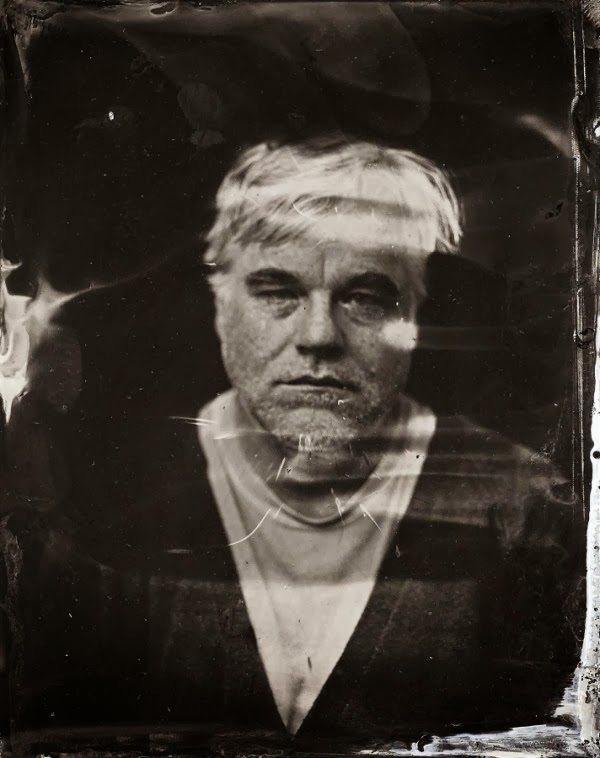
Sunday Afternoon, I'd arrived early to meet a friend in The Village, and as I stood waiting on the cold and windy street corner, I mindlessly scrolled through friends' updates on my phone. Several updates were expressing shock or sadness at the loss of some celebrity. Finally, someone used his initials, and after doing a Google search, I learned that only blocks from where I was standing, Philip Seymour Hoffman had overdosed and died. Right there, I burst into tears.

Hoffman was undeniably a great actor – an unlikely movie star with a doughy body and a big strawberry face that could be either warm and comforting, or menacing and cruel in equal measure – an awkward sidekick with enough internal emotional intensity to make him a compelling front man.  Praised and loved by audiences, critics, and colleagues alike, now he’s gone. Of course, I liked his work, (how could one not admire his brave and improbable performances?), but it wasn’t the loss of a great talent that struck me so sharply when I learned of his passing. It was that, once again, one of my own had succumbed. With such a body of work, so much success – family, career, money, fame, and prestige – why would someone as fortunate and gifted as this guy use drugs? Addicts use. Simple.

This coming Sunday I will have been without a drink or a drug for eleven years. My sobriety hasn’t come easy and it’s certainly not something that I take lightly. Getting sober is a treacherous and oftentimes soul-crushing challenge. Staying sober is painstaking and tricky. One unfortunate truth is that life happens, and sometimes it just plain sucks. Wouldn’t it be nice to “take the edge off” with a glass of cabernet or a cocktail? How bad could that be, really? How dangerous is recreational marijuana use if it’s being legalized across the country? Not very is my guess. And for a normal person those choices make perfect sense.  But for someone like me, or someone like Hoffman, once ignited, that ravenous and urgent inner need for relief and comfort becomes paramount to all else, and can never be satisfied by simply “taking the edge off.” I’m usually thinking about the third one before I’m finished with the first. Whether or not one concedes with the theory that the alcoholic suffers from an allergy, this is my experience. Personal history has shown me that having momentary relief leads me to seek oblivion – something “normal” people just don’t get, and this unexplainable internal demand remains what makes addicts and alcoholics different from other people.

I don’t think it was part of his press packet, but I don’t think it was a well kept secret either that Hoffman had been in recovery for more than two decades. So when I learned of his death, I wept. I wept for him, for others I've known who've been lost to the disease, for those yet to be taken, for those yet to be saved, and for myself. I wept and I heard the message loud and clear: long-term abstinence is not equivalent to a cure. I have a daily reprieve, that’s all.

I’m grateful and proud of my eleven years. They were painful, joyous, and hard-fought – I've earned my place at the recovery table and I don’t ever want to lose it. So today I will do what I did when I was new, and tomorrow I will do what I did when I was new, and I’ll help others when I can, and if I’m lucky, I’ll continue to walk in Grace. I am not a movie star, or a family man. I don’t have money, prestige, fame, or a list of glistening credits to my name, but I understand who that man was, and I understand him because I AM him. And by some Grace that I will never understand, I have another chance to live in remission.

Just for today.


Sunday, December 8, 2013

tom

December 1st was World AIDS day. It has been since 1988. This day usually rolls around every year with little notice. I saw mentions of it as I scrolled down my Facebook news feed. I noted that some of my friends had changed their profile pictures to pictures of red ribbons for the day, and I even read a few stories and articles about the early years of the epidemic. Other than that, there was little fanfare; no television specials about the history of the epidemic - how far we've come in 30 years in treatment and awareness, no televised news stories about how infection rates continue to climb in young people and in gay communities - just the regular suspects doing the same things that they did last year, and the year before that... choristers preaching to the choir.

Monday night, I was going from the East Village to Gramercy, and even though it was raining and cold, I decided to walk. I crossed 18th Street between 2nd and 3rd Avenues. I hadn't necessarily been avoiding this block, at least not purposely, but even with as much time as I've spent in that neighborhood, I hadn't walked down that block in years. On the south side of the street, towards the center of the block is a string of nearly identical townhouses; brownstone staircases leading up to an old-New York style grandeur of years gone by - big windows revealing high ceilings with ornate moldings and chandeliers. Each of these houses has small entrances underneath and to the side of their front stairs. One of these entrances led to the apartment that my boyfriend Tom used to live in back in the eighties. I couldn't be sure which was the one he lived in, but as I walked back and forth a couple of times trying to isolate which house it was, I remembered times I'd spent inside one of those buildings years ago; young, excited, in love, hopeful, not yet cynical, not spoiled; a naïve and innocent me, a deceptively simpler time. 

I didn't see many examples of healthy, loving relationships growing up. My grandparents had been married for decades, certainly they had loved each other, been dependent on each other, but I don't recall them showing affection for each other. My parents divorced when I was four, my mother went on to date and then marry domineering and abusive men, a model I knew I didn't want to repeat. And my father pretty much went through women as one might go through a seasonal wardrobe. It was the 70s, the sexual revolution, and while there were a couple of gals who stayed around for a while, when those relationships lost their luster, their newness, he'd call it off and move on to the next. Any negotiations or particulars of a day-to-day supportive and loving partnership were, and to some extent still are a remote and distant concept - one that I might grasp in theory, but have had no first-hand experience of in practice.  

Tom and I were young and we were foolish, carefree and uninhibited. The two of us, bundles of raw hormones set loose on each other (and the world) in an increasingly scary and uncertain time. Tom became HIV positive. Impending fear hung over our young lives as friends and acquaintances would get sick and then quickly vanish. I have no recollection of our even talking about our fear. I do remember Tom being tenacious and uncompromising in taking precautions to keep me safe. This often resulted in his withholding of sex - a gesture I can now see as loving, but as a young man raging with desire, was unable to accept. Even so, we managed to stay together through a number of tumultuous years, the fondness and physical attraction of each for the other outweighing the difficulties of our fear and our sero-discordance.

At the time, friends, justifiably enraged by the lack of HIV/AIDS services or treatment, Mayor Koch's lax response, and the Reagan administration's negligence harnessed their anger and joined ACT UP. I volunteered at GMHC (at the time, still a two room office above a restaurant on 18th Street and 8th Avenue) and the PWA Coalition, a small organization located in a donated apartment off of a courtyard on West 12th Street that helped people with AIDS acquire experimental drugs and acted as a support center for a community that was quickly being slaughtered by an invisible monster. 

I admired those brave warriors who threw themselves wholeheartedly into battle, educating themselves and their community through civil disobedience and community organizing; changing the trajectory of HIV/AIDS treatment and legislation for generations to come. I cheered them on; stayed on the periphery. I didn't possess the tools to focus or hold my resolve in the face of such loss or the fear of my own mortality. I turned my concentration to pursuing what then looked like a promising career in the arts, meeting people with similar interests and turning my attention away from the overwhelming health crisis and away from Tom. Tom, whose health was declining as he quietly slipped into depression and secret drug abuse. Of course, now, with hindsight and some adult critical thinking skills, these turn of events all make perfect sense, but at the time, I didn't know what was going on; I simply couldn't process what was happening in my world. 

For a few years, I excelled in my nascent career. I traveled, was lauded for my talents, met new and exciting people, and began to quietly immerse myself in drink and drugs - perhaps to quiet the guilt I'd felt for abandoning this love, for abandoning Tom, or maybe even the guilt of being an unlikely survivor when all that remained of handfuls of friends were memories of beautiful young men, no longer there to share my journey with; opportunity ripped from them. I was actively constructing protective walls all around me. Drugs, alcohol, and denial make for sturdy building blocks when creating an impenetrable barrier against the world. 

I learned that Tom had died after the fact. I hadn't seen or spoken with him in some time. Estranged from his family and with few friends, the young man who may have been the great love of my life had died a lonely and unnoticed death while I was off chasing childish ambitions. An adult, but really little more than a boy, with no emotional coping tools, it was too much for me to even consider. My alcoholism and drug addiction blossomed, my life would become a demoralizing whirlwind of unmanageability and shame that lasted the next ten years. I'd opted for ignorance of my own HIV status, understanding that a positive test result would likely mean death. In 1996, at a doctor's insistence, I took an HIV test and the results came back positive; just in time for the first generation of the life-saving "cocktail."

I walked 18th Street last Monday, and it was rainy, and it was cold. Certainly self-indulgent, perhaps even maudlin, I imagined all that might have been if circumstances had been different, if I'd been able to respond differently. Even if Tom couldn't have survived his illness (he died in 1990 or 91, five or six years before protease inhibitors were available), maybe facing my fears and my feelings, maybe being able to communicate openly with him could have saved him those final years of drug use and isolation, could have given us both a genuine, if all-too-brief partnership. Only now, more than a decade into my own recovery, am I beginning to unpack my feelings of such devastating loss - and of my love for Tom.  

Tom

Saturday, November 9, 2013

update:

Pope Continues to Shock World with Surprising Awesomeness

In the past couple of weeks, Pope Francis has continued to make international headlines with his decidedly un-Popelike behavior. In late October, during a Mass at St Peter's Square, he allowed himself to be upstaged by a little boy who refused to leave the stage, instead clinging to Francis' leg and eventually seating himself in the Pope's chair. Just this last week, pictures of the Pope kissing a severely disfigured man have gone viral. And now this!


Friday, September 20, 2013

beneficence


This past March, when Argentine Cardinal, Jorge Mario Bergoglio was chosen as head of the Catholic Church, I was quick to join in grumbling about the institution's cast-iron conservatism, dogmatism, and lack of progress. Directly following Benedict's (Ratzinger's) retirement; a career ecclesiastic whose tenure as Most Holy Father was plagued with scandal and hypocrisy, skepticism and disillusionment with the Catholic Church was at an all-time high.

Notwithstanding the encouraging possibilities of Bergoglio's being the first non-European to be chosen as Pontiff in 1200 years, as well as the first Jesuit ever, feelings of discontentment and doubt were escalated. Even as the world was rapidly progressing into the 21st century, it seemed the Catholic Church was preparing itself to demonstrate an even more rigid parochialism and dogmatic intolerance. So in July, when Pope Francis was asked about gay priests, and he responded, "Who am I to judge?," the trajectory of the church took a surprising and heartening shift.

Could this quiet and simple man single-handedly catapult the Church into a new direction? Unguarded and personal responses from this unassuming Pontiff seem to be doing just that. 

Pope Francis has done away with the protective-domed "Popemobile." He walks among the crowds kissing babies and shaking hands; he speaks of the poor and of service, and he has washed the feet of women (an act that outraged traditionalists), of prisoners, and of Muslims! As the planet's most highly-appointed ecclesiastic, he's brought new-found and unexpected humility and humanity to his title. Whether this can be attributed to his life and work as a Jesuit (an all-male order of the Roman Catholic Church whose mission focuses on education, ministering to the sick and impoverished, intellectual research, promoting social justice and ecumenical dialogue) or to the spiritual life and commitment of one man placed in the most iconic and powerful role of the Church will remain a mystery. Yet yesterday, a series of talks with The Pope was published, and the world got more of a glimpse into the man behind the title, and the Church's trajectory shifted even further.

In the extensive interview, Pope Francis candidly discusses homosexuality, women, contraception, and abortion. He reveals a surprisingly gentle and compassionate character while dealing with topics that have traditionally drawn acrimonious responses from high-ranking officials in the Church. 

"We cannot insist only on issues related to abortion, gay marriage and the use of contraceptive methods. This is not possible. I have not spoken much about these things, and I was reprimanded for that. But when we speak about these issues, we have to talk about them in a context. The teaching of the church, for that matter, is clear and I am a son of the church, but it is not necessary to talk about these issues all the time. 

The dogmatic and moral teachings of the church are not all equivalent. The church’s pastoral ministry cannot be obsessed with the transmission of a disjointed multitude of doctrines to be imposed insistently … 

We have to find a new balance; otherwise even the moral edifice of the church is likely to fall like a house of cards, losing the freshness and fragrance of the Gospel. The proposal of the Gospel must be more simple, profound, radiant. It is from this proposition that the moral consequences then flow.

I say this also thinking about the preaching and content of our preaching."

Frances' implication that the Church's continued "obsession" with specific social issues, and his prophetic warning that keeping those obsessions within the content of the Church's preaching will result in its ultimate destruction are prescient and sound. 

In an auspicious and ambitious turn, when asked specifically about gay people, the Pope said:  

“A person once asked me, in a provocative manner, if I approved of homosexuality, I replied with another question: ‘Tell me: when God looks at a gay person, does he endorse the existence of this person with love, or reject and condemn this person?’ We must always consider the person.”

It is enlightening to learn that the Pope's favorite film is Fellini's "La Strada," that he loves Mozart, and that he reads Dostoyevsky. All this new and personal information lends him an air of a kindly professor, or of a wise uncle (or use your own analogy). He comes across as intensely human, a trait not often associated with His Holiness.

Unlike the chain of events that occurred in the legendary land of Oz, the Church's curtain has been drawn back to reveal not a fumbling and self-serving fraud, but rather a humble and farsighted leader; a spiritual teacher who speaks of moving the Church beyond dogma and refocusing it on people. 

I am not Catholic, and I continue, with good reason, to be skeptical of the body that Pope Francis represents. Still, it is refreshing to have been proved wrong in my pre-judgement of him upon his selection. And how unsuspected to discover that the iconic head of a behemoth, world-wide, doctrinal institution might act as a personal pastor.


Saturday, September 7, 2013

september song


Last weekend, Labor Day weekend, officially marked the end of the summer season. Sure, the farmer's markets are still bounteous with tomatoes, corn, peaches, okra, and other flavorful end-of-summer produce, but kids are back to school, college campuses are bustling, and one can just tell that folks are anxious to start dressing in layers with their new sweaters and boots. My morning walks have been getting a little more brisk than I'm used to; very soon I'll have to break out the hoodies. Many people love autumn, but my experience is that any season change hits me hard - this one in particular. I love summer; the heat, the humidity, the late-evening sunsets, the empty streets on weekends, I just love it. So the impending months of cold grey weather and darkening afternoons hold no sweet promise for me.

I've been remiss (really more lazy) in keeping up with my blog posts over the summer. While I'd like to rattle off a list of enviable weekend spots I've visited or smart events I've attended, the truth is this season has been much more about quiet reflection, contemplation, and personal learning than about anything else. Balancing personal goals and family obligations. Showing up for my aging parents and my extended recovery community while balancing self-care and my spiritual life has proved to be no small order. Add to that the seemingly behemoth task of walking forward into the next chapter of my life as a newly college-graduated middle aged man, and things seem particularly daunting. For the moment, at least, I seem to be balancing these challenges with relatively little complaint. I have my fingers in a lot of pies. There's a lot on my plate. I have a number of balls in the air. Use whatever metaphor you wish - a whole bunch of stuff is coming down the pike, and more than anything, I'm excited. Scared, but excited. I'm not going to give much by way of specifics right now, but I'm juggling some charged propositions of what might propel me into the next few chapters. So while I haven't done a lot this summer, I'm entering fall hopeful. 

I'll keep you posted.

Thursday, June 6, 2013

shady lady / slush puppy

New York City is one of the greatest cities in the world. It's where I live - it's where I come from. I am challenged by it, I struggle through it, it's what makes me what I am, and I love it. I've enjoyed using this blog as a space to examine art, media, culture; museum and gallery reviews, etc., but in response to what I feel is the very real and impending threat of Manhattan, my hometown, becoming an exclusive island of behemoth bank accounts, luxury living glass towers, and corporate franchised chains, I'd like to weigh in on the state of the city and the upcoming Mayoral election.

Only a few years ago, it would have been unthinkable that I would not be supporting a female candidate for the Mayor of New York. Even more unimaginable still is that I'd not be supporting an openly lesbian candidate. I believe that the presence of women and LGBT people in elected positions or holding high office is essential to civil rights, equality, and fair representation. If I'm to be truly interested in equality, however, I need to honestly measure the candidates on their records, or, if you will, the content of their character.

As I watch the emerging media firestorm begin to swirl in anticipation of the upcoming Mayoral election; reading about each candidate's momentum, contributions, and endorsements as well as the media's rehashing of issues already present in most New Yorkers' consciousness: public education, stop and frisk, hospitals, public transportation, affordable housing, neighborhood safety, etc., I try to remain mindful that my immediate personal response to a candidate's personality may not necessarily be founded in a firm foundation of solid information. So I've tried to objectively assess my position on the candidates' records and positions, and it is that starting point from which I base my disapproval of Quinn. 

There has already been quite a bit of noisy and divisive rhetoric coming from the Quinn detractors: "anybody but Quinn," "New York is not for sale," etc. While I may agree with the positions of these detractors, pushing pejorative phrases, or reducing the disapproval of a particular candidate to a placard or soundbite may not be the most useful way to educate a voting public on where a candidate stands on issues. In fact, pushing forward a brash and negative tone might actually alienate some constituents; constituents who might otherwise have agreed with that particular position.


In Christine Quinn, New Yorkers have been dealt a significantly hard to overlook double whammy; she is a woman, and she is openly lesbian. These two facts indicate that she immediately has the support of certain local and national organizations whose primary purpose it is to ensure support for female and LGBT candidates around the country. Similarly, there are large portions of the electorate who will vote for her simply based on the fact that she is either female or lesbian. Early on in Quinn's campaign, as a lesbian, she received endorsements from the HRC, the Victory Fund, Empire State Pride Agenda, and the Stonewall Democratic Club of New York City. As a female candidate, she's been endorsed by EMILY's List, and the Women's Campaign Fund. These endorsements are deceptive. How can the Women's Campaign Fund endorse candidates as disparate as Olympia Snow, Elizabeth Warren, and Christine Quinn? Can they not see the glaring differences between these women? One need only look at the list of Quinn's top campaign contributors to notice that many of them are the same big businesses and corporate conglomerates that Warren would like to see prosecuted for tanking the economy and throwing working class Americans under the bus. Yet these national organizations cannot, or choose not to see it because their primary motivation is to identify and promote the gender, or orientation similarities of candidates. Most national women's political organizations support female candidates, period. And how about the good folks at HRC and the Victory Fund? Do you think they realize that Quinn has repeatedly and consistently turned her back on New York's LGBT community in favor of corporate investors and major developers? Have they considered how she used her short time at the LGBT Anti Violence Project as a personal political springboard for her own career and agenda? No, they seem only to see an openly lesbian Democratic candidate who supports marriage equality, and for their purposes, they need look no further. 

Assuming that a candidate is progressive because she is lesbian is as foolish as assuming that a candidate supports a woman's right to choose simply because she is female. Like many who came before me, I belong to a particular generation of gay people who've had to struggle for any recognition, many of whom may still believe that having an openly gay person in high office trumps any disagreements they may have with his or her record or positions - visibility at any cost. I disagree. In this instance, that cost is too high. That such a large number of LGBT people don't support Quinn is a refreshing indicator that we really have come a long way and are moving toward an environment of equality. We're entering an era where identity politics has permission to take a back seat to the nuts and bolts issues that face all New Yorkers. Considering that what is up for grabs is the most powerful office in New York, I'm less concerned with a candidate's orientation than I am with his or her vindictive nature or plethora of questionable campaign contributors. 

My local bagel store is now a Verizon Wireless center. My neighborhood discount drug store is a Bank of America. If you are like me, you may have noticed that there is scarcely a spot you can stand on the island of Manhattan where you are not more than three blocks from a Duane Reade. 7-elevens, once a suburban and rural phenomonon to New Yorkers, are now popping up around downtown Manhattan, willy-nilly, like so many pimples on an adolescent's forehead. Of course, Quinn is not single-handedly responsible for these changes, but her history of kowtowing to corporate interests, developers, and tourist revenue would indicate that these sorts of changes would continue unabated. If this homogenizing and strip-mining of neighborhood uniqueness isn't enough to convince you of the kind of catastrophe that would likely result from a Quinn administration, perhaps you might consider how Quinn has stashed City Coucil funds in phantom accounts to later be doled out for her pet projects; aka slush funds; her questionable position on "Stop and Frisk," or the use of her office to advance the interests of real estate developer donors. There is also her position on carriage horses and animal rights to consider, as well as how she is the lone candidate in the field who will not promise an educator as public school chancellor (think Cathie Black). There are no shortage of issues to examine where Christine Quinn's involvement and voting record are not questionable (secrecy, cronyism, slush funds, vindictive withholding or allocating of public funds, overturning term limits, etc.). Perhaps, not least of all, the recent string of hospital closings, most notably Saint Vincent's.

It is plain that Quinn's motivations lie in keeping closely in cahoots with corporate interests, large and powerful real estate developers, and fostering continued record tourist revenue. One only need attempt to drive through midtown to notice that seemingly every third intersection is now a mini-park with lushly-packed planters, lounge chairs, and picnic tables. These mini-parks are lovely urban oases, to be sure, but they can also be frustrating obstacles for commuting New Yorkers. And what of the sudden surfeit of corporate branded Citibikes? Easy affordable bike-shares for working New Yorkers? That has yet to be seen, but once families of tourists start running amok on Manhattan streets atop those 45 lb cycles...  Well, that's a whole other post in itself.

Quinn is a self-proclaimed "fierce advocate for gay rights." She claims paramount concern for issues facing the LGBT community. In that light, I can't be the only one to have noticed the irony of her participating in a protesting march to draw attention to the rise in violence against LGBT people. The march and protest was held in immediate response to the fatal shooting of 32 year old Mark Carson. It is not farfetched to speculate that Carson's life might well have been saved had there still been a hospital (St. Vincent's) just two blocks from the shooting, rather than having to wait for an ambulance and then make the trip across town to Beth Israel Hospital. The march, it should be noted, took place in the shadow of the skeleton of what once was an historic hospital that served the gay community for generations, and was the nerve center of treatment during the early years of the AIDS crisis. 

Truth: eliminating a hospital and emergency center that serviced gay people is violence to gay people.

In another move that reads as shockingly antithetical to the interests of gay and lesbian people, Quinn's strong-arming of City Council to rename the Queensboro Bridge after Ed Koch, in spite of overwhelming public opposition, is indeed questionable. Josh Isay, Quinn's chief strategist has said that "Ed Koch was an incredible leader for the city." Isay, and by default, Quinn seem to have forgotten that Koch (How'm I Doin'?) who was in the closet, ignored the gay community in the early years of AIDS as tens of thousands of gay men died - most probably out of fear of calling attention to his own questionable orientation. In what appears to be pandering for endorsements from beyond the grave, now the Quinn campaign is courting Koch's surviving sister to amplify what would have purportedly been his support for Quinn's candidacy.

In an interesting turn of media attention, presumably in response to a flurry of bad press, especially a very unflattering New York Times piece, Quinn came out publicly as a recovering alcoholic and bulimic. In an interview for the New York Times, she talks about her mother dying of breast cancer, and the sadness and loneliness that ensued after her mother's death, which led her to alcohol. It may read as overly cynical, but one can't help question whether the timing of the decision to go public with this information might have been calculated to make her appear more human in light of press reports that have painted her as a volatile and vindictive political animal. May she have the best of luck and good fortune on her journey in recovery, however, the move to come out at that particular time seems devilishly shady.

Hopefully more unsavory truths about Quinn will be revealed as we get closer to the election, and hopefully, New Yorker's won't be fooled by her political savvy, as they were with Guiliani or with Bloomberg. Suffice it to say, this lady looks to be one nasty piece of work, and having her as Mayor would be an utter catastrophe for New York City.